The best way to help someone with type 2 diabetes is to ask what support they actually want, then focus on practical things like medication reminders, meal preparation, appointments, and company. Leave anything medical to their GP or diabetes team, and check in regularly rather than assuming what's needed. Respecting their independence matters just as much as the help itself.
If you've searched for how to help someone with type 2 diabetes, you're already doing one of the most useful things you can do: taking the time to understand what genuinely helps. Many families feel unsure where to start after a loved one is diagnosed with type 2 diabetes, especially if there are other health conditions to think about too. This guide walks you through the practical, everyday things that make a real difference, and where Tiggo Care can step in with extra support at home if family alone isn't quite enough.
The right kind of support starts with a conversation, not a plan you've already worked out in your head. There's no single formula for how to help a diabetic friend or relative, since everyone's needs are different.
It's tempting to take charge, especially if you're worried. But how much support someone wants can change from week to week, so it helps to check in rather than assume. It's natural to worry about risk, but panic rarely helps; thoughtful, practical support does. Try asking specific questions instead of a vague "let me know if you need anything". Questions you might ask include:
When creating a supportive environment for someone with diabetes, you should avoid constant supervision or micromanagement. Overseeing every food choice or test result usually does more harm than good, and it can make someone less likely to be honest with you when things aren't going well.
The same applies if you're supporting a diabetic friend rather than a family member. Respecting autonomy allows people to manage their condition effectively without feeling controlled, so ask, listen, and let them lead.
If you're wondering how to help type 2 diabetes feel less overwhelming for your loved one, the answer usually lies in small, consistent routines rather than big changes. The most useful thing you can do for managing diabetes is to support the plan their doctor has already put in place, not create a new one.
Type 2 diabetes develops when the body stops using insulin properly. Over time, this can lead to diabetes complications affecting the eyes, kidneys, nerves and heart. Type 2 usually develops gradually, often over several years, which is part of why it can go unnoticed for a while.
Several factors shape how the condition develops, including:
Understanding these risk factors can help you make sense of why the condition looks so different from one person to the next. People younger than 40 can face different pressures compared with older adults juggling other health conditions, so it's worth asking what matters most to your loved one rather than assuming.
Your role isn't to direct their care day to day. It's to help them stick with whatever their healthcare team has already agreed, whether that's a treatment plan for healthy eating, a medication routine, or regular appointments.
Alongside medicine, their team will likely have discussed wider lifestyle changes too. Sleep, stress and other factors can all influence blood sugar just as much as food and medicine.
Small, consistent habits, like regular mealtimes and activity, help manage blood sugar levels day to day. Good disease control, following whatever their diabetes team has recommended, can reduce the risk of complications over time. We won't try to change how someone manages their diabetes. Our role is simply to help them manage it, in line with what their doctor has advised.
Most people with type 2 diabetes are guided by a well-established set of approaches, and knowing what these involve helps you support your loved one without stepping into medical territory yourself. Understanding Type 2 diabetes involves knowing insulin handling and blood glucose fluctuations, and it helps to learn the basics alongside your loved one rather than separately. Blood glucose is simply the medical term for blood sugar, and you'll see both used interchangeably throughout this guide.
Diabetes affects everyone differently, so what one person's team recommends may look nothing like what another's advises.
Some people are diagnosed using an oral glucose tolerance test, which checks how the body responds to sugar over a couple of hours. From there, most people have their average blood sugar level checked every few months using an HbA1c blood test. Regular check-ups are essential for diabetes management, even when everything feels stable. Regular medical care helps monitor blood glucose and prevent complications long before they become serious.
Routine reviews often cover:
Left unchecked over many years, high blood sugar can also raise the risk of serious complications, including digestive and kidney diseases, alongside the more widely known risks to eyes, nerves, and the heart. Over time, it can affect how the body heals and fights infection too.
If lifestyle changes alone don't control blood sugar levels, their GP may prescribe diabetes medicine. Common options include:
If these other medicines don't bring blood sugar into a healthy range, insulin therapy may be needed if other medications fail to control blood sugar. Tablets and other treatments are usually tried first, with insulin only coming into the conversation if they're not enough.
Guidance from the National Institute for Health and Care Excellence shapes much of what UK GPs recommend here, and international bodies such as the American Diabetes Association broadly agree on the overall approach, even if exact targets vary slightly between countries.
There's no single "diabetes diet". People with diabetes can still enjoy their favourite foods in moderation with adjustments. Cooking healthy meals together can promote healthy eating habits if you're up for joining in. Their dietitian might suggest a few general principles:
For some people, especially soon after diagnosis, their team might discuss weight:
Nutrition advice will always come from a dietitian or GP, never from us. Reaching a healthy weight is often part of the wider plan.
On activity, national guidance suggests adults aim for at least 150 minutes of moderate-intensity activity weekly. This matters because:
Any exercise programme should fit around existing mobility and other health problems. If your loved one takes insulin, their team may have told them that blood sugar should be checked before and after exercise.
Blood sugar levels should be checked regularly for diabetes management, though how often depends entirely on their individual treatment plan. A few tools make this easier:
Keeping an eye on glucose levels over time, rather than reacting to a single reading, tends to be far more useful. Diabetes education courses are recommended for everyone with diabetes, and supporters are usually welcome to join too, which is a good way to learn together rather than explaining things to each other afterwards.
When people search for help for type 2 diabetes, they're often picturing something complicated. In practice, it's usually simpler than that: the kind of help that matters most day to day is rarely medical; it's practical, consistent, and easy to overlook.
Insulin is one of the medicines some people with type 2 diabetes eventually need, alongside or instead of tablets. A consistent routine with medication and insulin is one of the simplest ways to manage blood sugar without much fuss. A gentle reminder, a shared pillbox, or simply asking "have you taken your tablets today?" can help without feeling like nagging.
Some people eventually need insulin injections if tablets alone aren't enough. This is one area where extra support genuinely matters. Insulin is the one injectable medicine a trained care assistant can support with under UK rules, unlike most other injectable treatments. If daily prompts and insulin support become more than family can manage alone, this is exactly the kind of day-to-day help covered by Tiggo Care's diabetes home care service here in London.

Diet is often the first thing families want to help with, but it's the one area where the day-to-day specifics should come from a professional, not from us. You're not expected to become a dietitian.
The most useful thing you can do is prepare meals to whatever plan their dietitian or GP has already set, rather than deciding what's "healthy" yourself. This might mean stocking whole grains, vegetables, and lean protein, or simply cooking the meals they've already been shown how to make.
Offering to go to regular appointments together, rather than just reminding them to go, tends to be far more useful. Support can include attending healthcare appointments together. A second pair of ears in the room often catches details that get missed.
Picking up prescriptions, helping with the weekly shop, or taking care of jobs around the house frees up energy for the things that matter more. Many families also value support with personal care alongside these everyday tasks, arranged around a personalised care plan built for your loved one specifically.
Joining them for a walk, or simply being around, helps more than it might seem. If they've been told to stay physically active, being their regular walking partner can make it easier to stick with it, without you needing to set the pace or the routine yourself.
That's what real diabetes type 2 support looks like: medication routines, meals, appointments, and company covered consistently, not occasionally.
Knowing the general signs of high and low blood sugar means you can act quickly, without needing to play doctor. Blood sugar can drop or rise quickly, so it helps to know the general pattern for your loved one specifically.
Hyperglycaemia refers to high blood sugar while hypoglycaemia refers to low blood sugar, and it's worth learning the general signs of both, even if you never need to use them.
Knowing the signs of hypoglycaemia includes recognising shakiness, sweating, and confusion. Symptoms can build up quickly, so early signs to watch for include:
If you notice any of these, encourage your loved one to check their blood sugar levels straightaway, since low blood sugar levels can escalate within minutes. Their healthcare team may have advised keeping glucose tablets or a small carton of fruit juice nearby for exactly this reason.
Extreme thirst, needing the toilet often, or blurred vision can point to blood sugar running high. If any of these last more than a day or two, encourage them to contact their GP or check the full symptom list.
Some situations need urgent help. Call 999 straightaway if you notice:
These situations can be life-threatening, so emergency care should never wait. Keep a simple note of their medicines and GP surgery details somewhere easy to find; a fridge magnet or phone note works well, so anyone helping in an emergency has what they need.
Living with type 2 diabetes can take a real emotional toll, and often what helps most is simply listening. Looking after your loved one's mental health matters just as much as looking after their blood sugar.
Type 2 diabetes is a chronic condition, so it's completely normal for there to be good days and harder ones. Chronic conditions can take a heavy emotional toll on people, whether it's the diagnosis itself, a medication change, or a difficult check-up.
Emotional support is crucial for managing diabetes stress. A few things make a real difference:
If low mood lasts more than a couple of weeks, gently suggest they mention it to their GP. Support networks can help manage diabetes-related anxiety. Many people find comfort in support groups or online forums run by charities such as Diabetes UK.
Supporting someone with type 2 diabetes affects your own physical and mental health too, so it's worth taking seriously.
Looking after a loved one can quietly affect your wellbeing, especially if you're juggling work, children or other responsibilities. It's easy to put your own needs last.
It's completely fine to ask other family members or friends for help with specific tasks, whether that's a lift to an appointment or an hour of company so you can take a break. Sharing the load isn't a failure. It's sensible.
If things are consistently overwhelming, a short break can help more than pushing through. Tiggo Care's respite care service exists for exactly this, giving you planned time off while your loved one continues to receive the same familiar, consistent support at home.
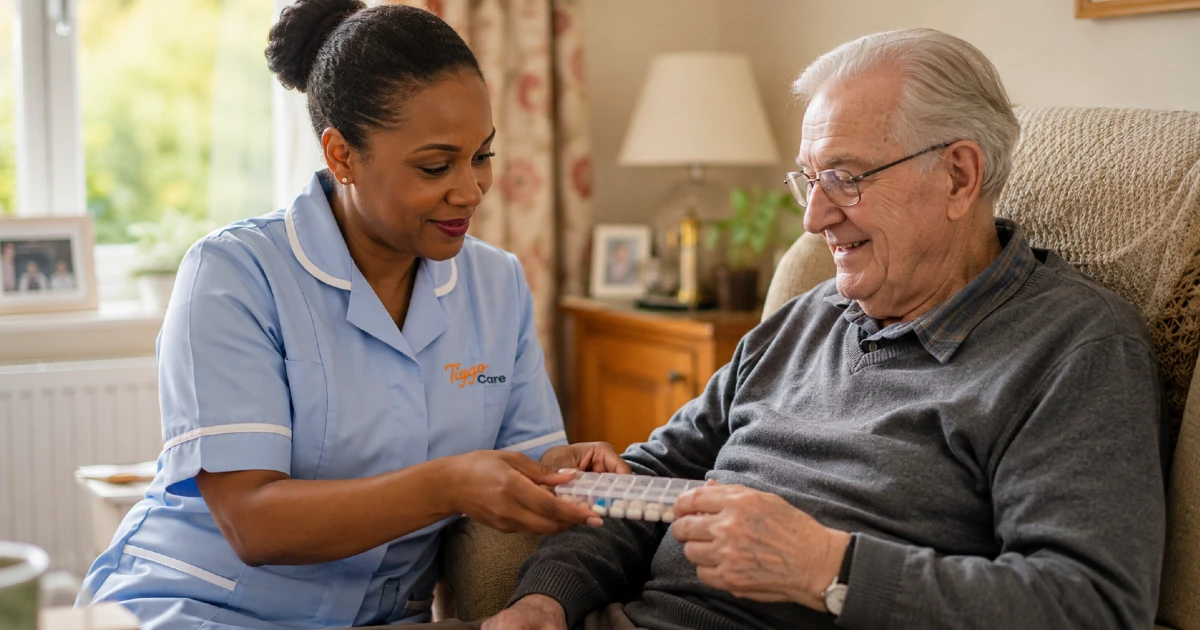
There often comes a point where the daily routine of supporting someone with type 2 diabetes becomes more than one family can manage alone, and that's when extra help at home is worth considering. If you've been searching for diabetes type 2 help that fits around your family's routine, arranging a little extra support is often the answer.
Even the most devoted family member can't be everywhere at once. If medication reminders, meal preparation, appointments, and company are stretching you thin, arranging extra support doesn't mean stepping back. It means making sure your loved one still gets everything they need, consistently.
Tiggo Care builds a personalised, bespoke care package around your loved one's existing treatment plan, never a generic one. That can include:
This kind of support sits within our wider home care services. For some families, moving to live-in care offers more continuous support as needs grow. You can see the full range on our services page.
Families who've arranged support through Tiggo Care often mention the same thing: that consistency and communication matter as much as the practical help itself. As Tilly S, whose relative receives care at home, put it:
"The care team from Tiggo are all efficient, kind and reliable. It is wonderful to see an elderly relative so well looked after in her own home and the continuity of carers has been excellent. The communication with the family is very good, and Tiggo have always been quick to respond to any additional requirements. The team in the office know their clients and all their carers, which really makes it stand out from some big care companies. We are delighted with the level of care and compassion."
Supporting someone with type 2 diabetes is rarely about grand gestures. It's the practical things, a reminder here, a lift to an appointment there, a shared meal cooked to their plan, that add up to a real difference over time. Ask what they need, respect their independence, and look after your own wellbeing along the way too.
If daily support has grown beyond what family can manage alone, Tiggo Care is here to help. We're regulated by the Care Quality Commission (CQC), meaning our services are regularly inspected against standards for safety, effectiveness, care, responsiveness, and leadership. We're proud members of the Homecare Association and have been recognised by homecare.co.uk and Age UK as one of London's leading home care providers. Get in touch to discuss how we can arrange care visits around your loved one's routine.

Chris Williams is the Founder and Managing Director ofTiggo Care, an award-winning London home care provider that supports adults living in their own homes. He founded Tiggo Care after struggling to find suitable care for his parents, both of whom lived with rare diseases, giving him first-hand experience of the challenges families can face when arranging personalised home care. Chris studied Human Sciences and Epidemiology at Oxford University and previously worked at Kearney and Oxford Sciences Enterprises.
Start by asking what kind of support they'd actually find useful, rather than assuming. Most people appreciate practical things like a lift to appointments or help with meal preparation to their existing plan, more than unsolicited advice.
Avoid comments about food choices, weight, or willpower, even when well-meaning. Comparing their situation to someone else's diabetes, or suggesting they aren't trying hard enough, tends to cause hurt rather than help.
Yes, though day-to-day decisions should stay with the person and their GP or healthcare professional. Family support works best alongside the existing plan, not instead of it. Reminders, company, and encouragement make a genuine difference.
Type 1 diabetes always requires insulin from diagnosis, while type 2 often starts with lifestyle changes and tablets, although some people will go on to need insulin. The everyday support you offer, including listening, practical help and accompaniment to appointments, is largely the same either way.
Shakiness, sweating, sudden hunger, confusion, and irritability are common signs of low blood sugar. If someone you're supporting shows these signs, encourage them to check their blood sugar and follow whatever their healthcare team has advised for treating it.
It's worth considering extra support when daily tasks like medication, meals, or appointments become difficult to keep on top of consistently, or when family carers feel stretched too thin themselves. Professional home care can fill that gap without taking away independence.
Get in touch with Tiggo Care today to see how we can help you or your loved one.



.webp)


.jpg)